The Invisible Engine: Why Real-Time Matters in Modern Tech
If you're interviewing for engineering roles, especially at scale-up or FAANG companies, "System Design" is a critical gate. And few systems are as ubiquitous—and complex—as real-time communication tools like WhatsApp, Telegram, or Slack.
As your Candidate Protector, we know that understanding these architectures doesn't just look good on a whiteboard; it shows you grasp scalability, reliability, and trade-offs—the bedrock of high-performing teams. Let’s break down how engineers build systems that deliver messages instantaneously.
Polling vs. Pushing: Understanding Connection Strategies
The core challenge in real-time systems is getting information from the server to the client without the client constantly asking, "Do you have anything new for me?" There are three primary historical and current approaches:
1. Traditional Short Polling (The Old Way)
The client periodically sends an HTTP request (e.g., every 5 seconds) to the server asking for updates.
- Pros: Simple implementation.
- Cons: Highly inefficient. Wastes bandwidth and server resources, especially if there are no new messages (empty responses). High latency if the polling interval is too long.
2. Long Polling (The Clever Compromise)
The client sends a request to the server, and the server intentionally holds the connection open until data is available (or a timeout occurs). Once data is sent, the connection closes, and the client immediately initiates a new request.
- Pros: Lower latency than short polling. Reduces the number of requests compared to short polling.
- Cons: Still uses HTTP request/response overhead for every message. Requires careful resource management on the server to handle thousands of concurrently open connections (threads).
3. WebSockets (The Modern Standard)
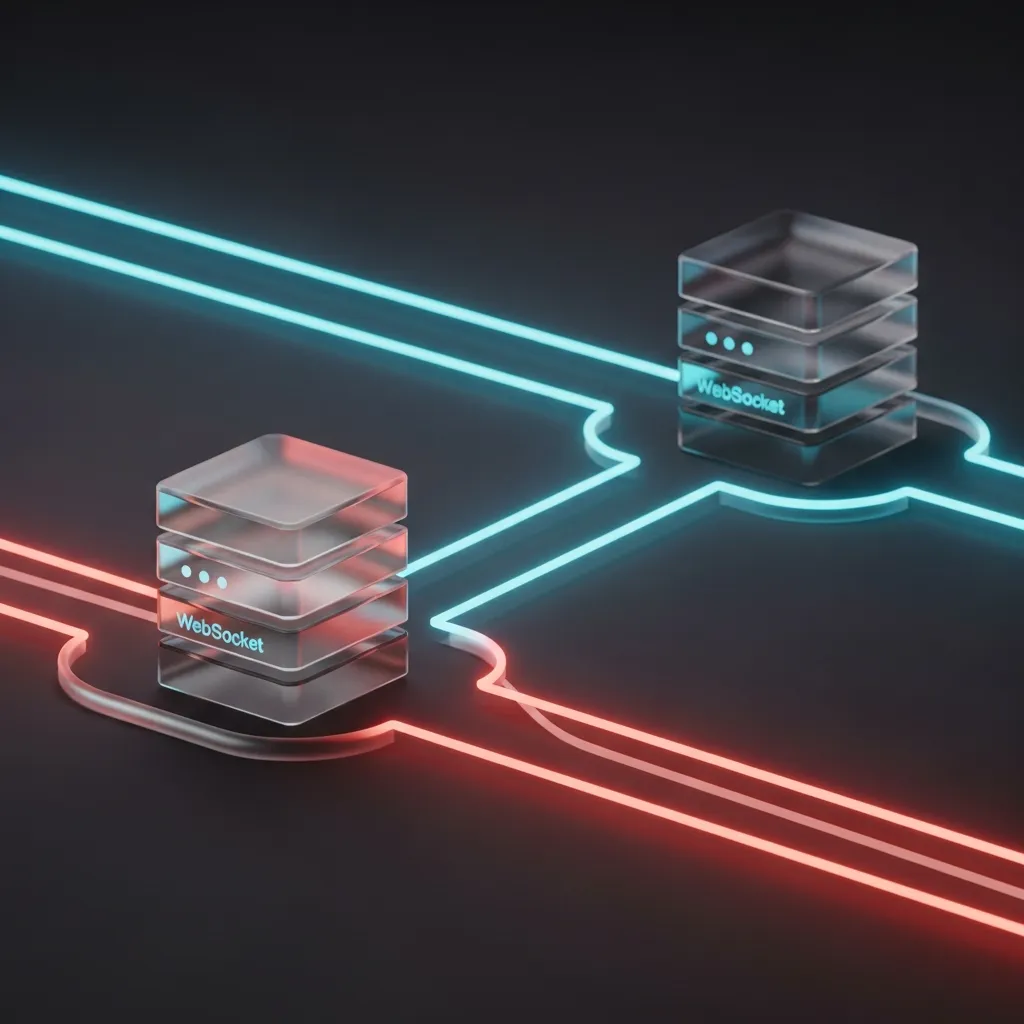
WebSockets establish a full-duplex, persistent connection over a single TCP socket. After the initial HTTP handshake (the upgrade request), the channel remains open, allowing data to be pushed from server to client, and vice versa, at any time.
- Pros: Extremely low overhead after setup. Near real-time communication. Efficient resource utilization (fewer packets exchanged).
- Cons: Requires dedicated server infrastructure (WebSocket handlers) and careful handling of connection state. Not suitable for legacy browsers (though this is rare now).
The Verdict: Modern chat systems, especially those requiring low latency like gaming or live messaging (WhatsApp, Telegram), rely heavily on WebSockets. Long Polling might still be used for compatibility or systems that require less frequent, less critical updates.
Core Architecture Components of a Scalable Chat System
Designing a global chat service isn't just about WebSockets; it’s about managing state, ensuring delivery, and handling millions of concurrent users.
1. Load Balancing and Connection Management
When a user connects, the system must route their request to an available server capable of handling WebSockets.
- Sticky Sessions: Traditional stateless load balancers are problematic for WebSockets. You often need sticky sessions (mapping a user connection to the same backend server) or a dedicated connection router layer to maintain the persistent session state.
2. Message Queue (MQ) for Reliability
Messages should never be processed directly by the connection server, especially if that server might fail.
- Function: When User A sends a message, the connection server puts it into a robust, ordered message queue (like Kafka or RabbitMQ).
- Benefits: Decouples message sending from delivery, ensuring reliability and allowing other services (like notification handlers, persistence layers) to consume the same data stream.
3. Persistence Layer (Databases)
Chat history and user data need to be stored efficiently.
- Storage Strategy: Often a hybrid approach:
- NoSQL (e.g., Cassandra/DynamoDB): Excellent for highly available, distributed chat history storage (optimized for timeline queries).
- Relational (e.g., PostgreSQL/MySQL): Used for user profiles, metadata, and transactional data.
4. Delivery Service (The Actual Pusher)
This service constantly monitors the Message Queue. When a new message arrives, it identifies the recipient's connection server and pushes the message through the active WebSocket connection. If the recipient is offline, the message is marked as pending.
FAQ: Scaling Real-Time Architectures
Q: How do you handle message delivery confirmation (read receipts)?
A: The client sends confirmation messages (e.g., delivered, read) back to the server, which are processed, stored in the persistence layer, and then pushed back out to the sender's client via their WebSocket connection. This ensures both parties have the correct state.
Q: What happens if a server crashes mid-connection?
A: This is where connection reliability is paramount. The client should have a robust re-connection mechanism with exponential backoff. Upon reconnection, the client sends a "last seen message ID" to the server, and the server uses the persistence layer and MQ logs to deliver any missed messages.
Q: How do you manage global presence (online/offline status)?
A: Presence status is stateful and volatile. It's often managed using an in-memory key-value store like Redis. When a user connects or disconnects, the connection server updates the Redis status, and the Delivery Service pushes this status change out to relevant contacts.
Your Career Architecture: Build Resilience
Understanding these complex real-time systems isn't just academic; it’s how you prove your technical depth in high-stakes interviews. Whether you're discussing the trade-offs of using Long Polling versus WebSockets or designing a scalable database structure, preparation is key.
If you’re preparing for a system design challenge or technical interview, make sure your professional documents reflect your capability. Use our AI Cover Letter Generator to articulate your expertise clearly, and run your resume through our ATS Reality Check to ensure your technical skills aren't getting filtered out. Build your career architecture with the same resilience as the best real-time systems.