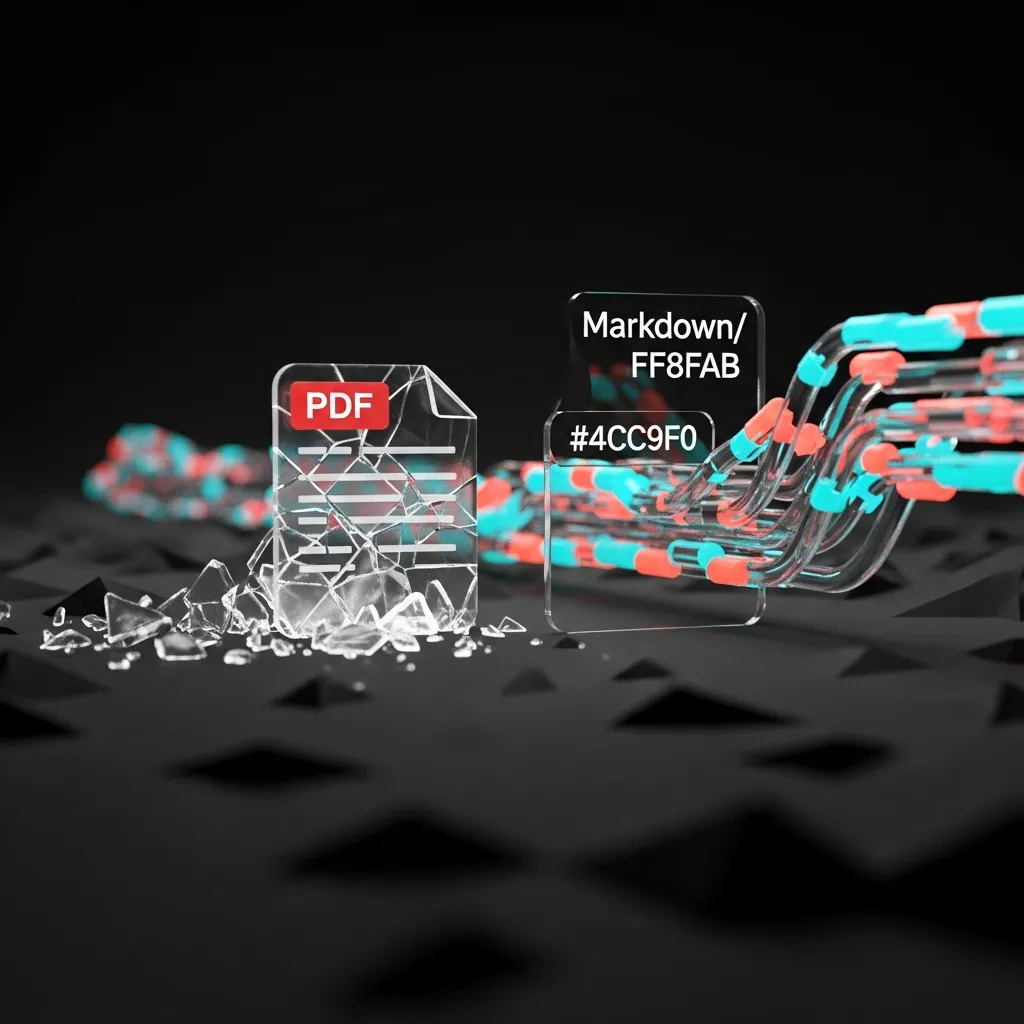
The Silent Killer of Applications: Why PDF Resumes Fail
For decades, the standard advice was simple: save your resume as a PDF to "lock in" the formatting. While this works well for human eyes looking at a printed page, it is often catastrophic when your application meets an Applicant Tracking System (ATS).
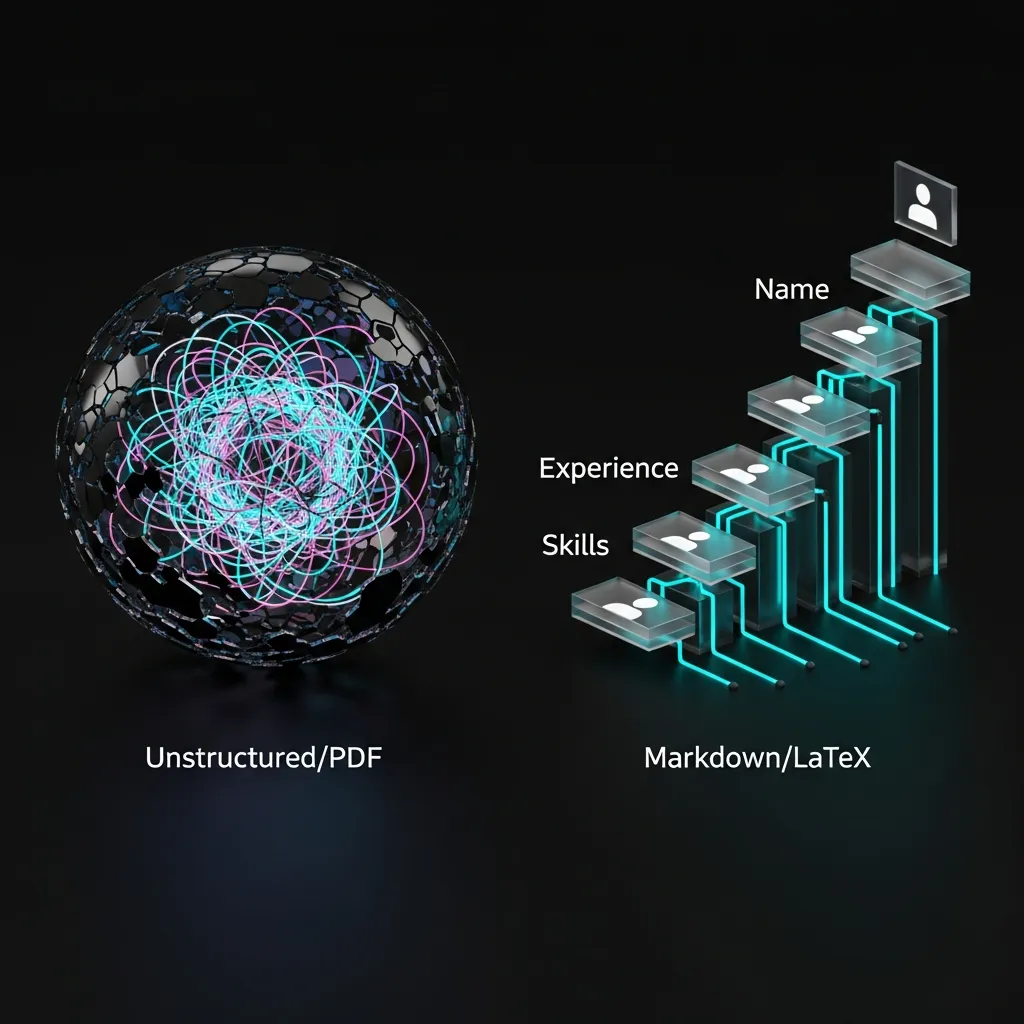
The modern job market requires applications to be read and categorized by AI first. A PDF, especially one with complex layouts, columns, or non-standard fonts, often converts into gibberish text strings when parsed by an ATS. The result? Critical information like experience dates, company names, or essential skills are misplaced or completely dropped. Your qualifications are rendered invisible, leading to an automatic rejection—and you’ll never know why.
This isn't about human error; it's about structural integrity. If the system cannot reliably map your data (Name, Job Title, Company) into its structured database fields, your application fails the most basic compliance check. We believe in being a Candidate Protector, ensuring your data is transmitted accurately. To check how your current resume performs, use our specialized ATS checker tool at /ats-check.html.
Structured Data: The Core Principle of Machine Readability
The solution lies in moving away from presentation-focused formats (like complex PDFs) toward structure-focused, machine-readable formats. These formats prioritize the meaning of the content rather than its visual appearance.
Machine-readable formats, particularly Markdown and LaTeX, are inherently superior because they use simple, consistent syntax to define data hierarchy.
- Markdown: Uses plaintext syntax to define headers, lists, and emphasis (e.g.,
## Experience,* Bullet Point). - LaTeX: Uses commands and environments to define specific document sections and metadata, often used for highly formal or technical documentation.
Both ensure that no matter how the final document is rendered, the underlying structure—the data—remains perfectly organized and predictable for computer parsing.
Markdown: Simplicity Meets Structure
Markdown is the simplest entry point into structured resume creation. It is fundamentally plain text enhanced with minimal, intuitive markers.
Advantages of using Markdown for your resume:
- Universal Compatibility: Markdown files (.md) can be read by virtually any text editor or program, making them highly portable.
- Guaranteed Parsing: Since there are no complex visual elements, an ATS parsing engine sees only clean, structured text.
- Speed and Adaptability: You can maintain a single
.mdfile and easily export it to clean HTML, JSON (for APIs), or even a very clean, structured PDF, ensuring the source data integrity is never compromised.
This format strips away unnecessary complexity, ensuring your skills and experience are the only things the hiring system focuses on.
LaTeX: Precision and Professional Formatting
If Markdown is the swift, agile option, LaTeX is the robust, professional typesetting system often favored by academia, engineering, and highly technical fields.
While the syntax is more complex than Markdown, LaTeX offers unparalleled control over document logic and design, without sacrificing structure.
Why professionals choose LaTeX resumes:
- Semantic Markup: LaTeX uses commands like
\section{Experience}or\cvitem{Role}which explicitly label the purpose of the text block. - Beautiful Output: It generates exceptionally high-quality, professional-looking PDFs that are still structurally sound, as the layout is handled by a sophisticated compiler, not a visual editor.
- Standardized Templates: Highly specific, career-focused templates (like those found in Overleaf) ensure compliance with aesthetic standards while maintaining excellent data architecture.
The RolePilot Stance: Protecting Your Data Integrity
Our mission at RolePilot is to protect the candidate. We advocate for formats that treat your career history as valuable, structured data, not just pretty pictures.
The shift from visual formats (PDFs created in Word or Canva) to machine-readable formats (Markdown or LaTeX) is not a trend; it is a fundamental requirement for succeeding in an automated hiring landscape. By adopting these formats, you reclaim control over how systems interpret your credentials.
We encourage you to experiment with converting your current resume data into a structured format. Don't let layout glitches erase years of hard work. Always verify your resume's integrity using tools designed to simulate ATS parsing, ensuring that your switch to structured data pays off when you hit 'Submit.'
\n\n \n\n
\n\n \n\n\n\n
 \n
\n