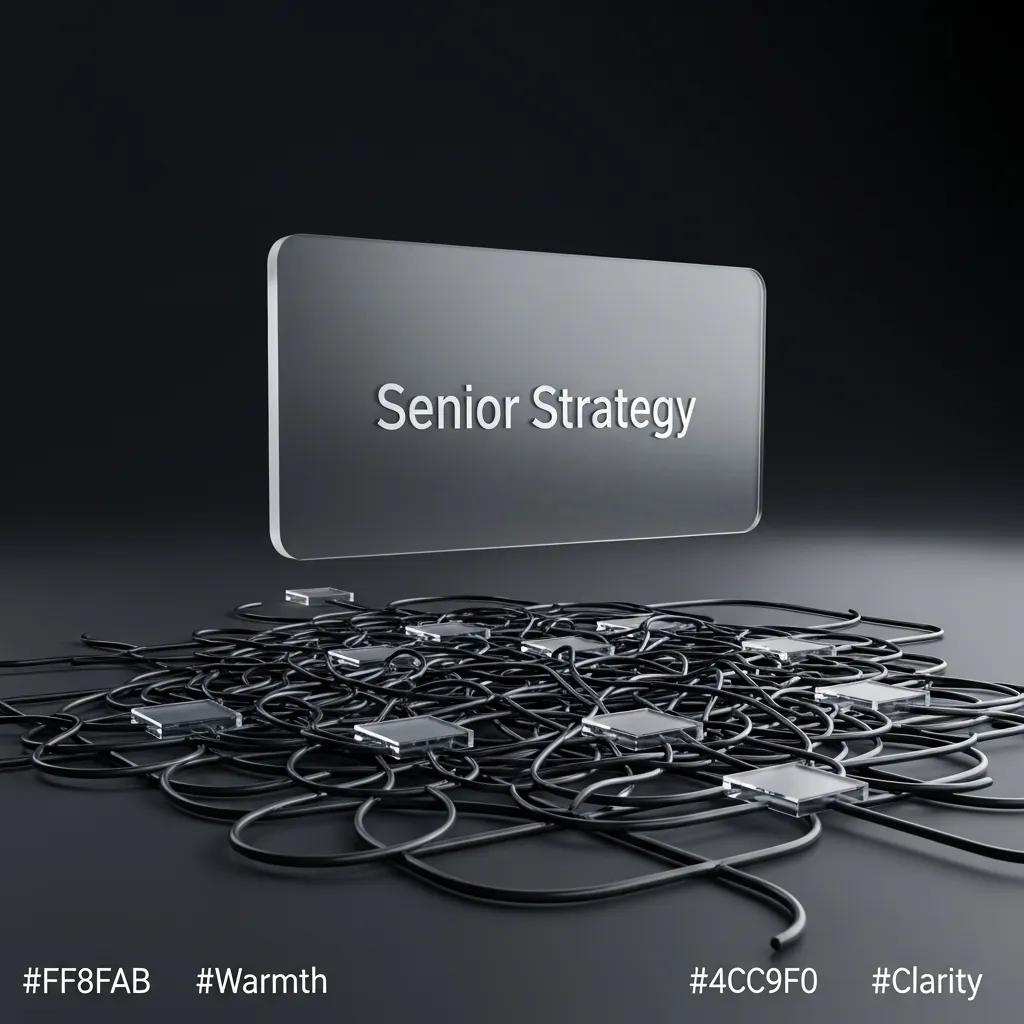
The Fundamental Shift: From Execution to Strategy
As you advance from Mid-Level to Senior and beyond, your career focus shifts dramatically. A junior role is defined by execution: completing tasks, following instructions, and achieving defined outputs. A senior role, however, is defined by strategy, foresight, and high-level business impact.
Your cover letter must reflect this evolution. If you write your cover letter as a chronological list of responsibilities, you risk sounding like an experienced junior—someone good at tasks, but lacking the strategic perspective that defines a Senior leader.
RolePilot is designed to protect your candidacy. This guide focuses on shifting your communication to align with C-suite expectations, ensuring your cover letter speaks the language of leadership.
Mistake #1: The "Task List" Trap (Sounding Junior)
Recruiters often see Senior cover letters that read like this:
- “I was responsible for developing microservices using Python and AWS.”
- “I managed a team of three developers.”
- “I ensured project deadlines were met.”
While these statements are factual, they describe what you did, not why it mattered or how you changed the outcome. These phrases are passive and responsibility-focused, which is appropriate for entry-level summaries.
The Senior correction: Focus on the strategic problems you solved, the decisions you drove, and the outcomes you achieved. Senior candidates use active verbs and frame their experience around business objectives.
If you want to ensure your entire application—from resume to cover letter—passes through automated screening effectively, start by verifying your format and keywords with our powerful tool: check your document readiness at our /ats-check.html page.
The Senior Advantage: Quantifying Business Impact
For Senior roles, hiring managers want to understand the ROI of hiring you. They aren't worried about whether you can use a specific tool; they are concerned with the financial, efficiency, or operational improvements you will deliver.
Instead of listing a skill, list the impact created by that skill. Your cover letter should connect your actions directly to the company’s bottom line.
Junior Statement: "I implemented a new caching layer."
Senior Statement: "I architected and deployed a new distributed caching layer, reducing average API response time by 45% and saving $15,000 monthly in unnecessary server scaling costs."
Notice the difference: the Senior statement introduces the solution (architected), uses quantifiable metrics (45% reduction), and ties it directly to financial impact (saving costs). This demonstrates business acumen, not just technical ability.
Beyond Code: Showcasing Mentorship and Leadership
A core expectation of any Senior professional is the ability to multiply their impact through others. Mentorship, technical leadership, and strategic guidance are often more critical than individual contribution.
In your cover letter, dedicate space to your leadership philosophy and successes. Avoid generic phrases like “I mentored junior staff.”
Senior Leadership Examples:
- Process Improvement: “I standardized our team’s code review process, decreasing critical bug introduction by 60% over two quarters, thereby stabilizing our product release cycle.”
- Hiring & Development: “I spearheaded the onboarding program for new engineers, leading to a 30% reduction in average ramp-up time and higher long-term retention rates within the department.”
- Cross-Functional Strategy: “I successfully translated complex technical debt challenges into a clear business case for the executive team, securing budget approval for the migration project.”
This demonstrates you are not just a contributor, but a force multiplier who elevates the entire organization.
Tailoring the Message: Addressing Company Challenges
Senior cover letters require deep tailoring. You should not be writing about your past successes in a vacuum; you should be writing about how your past successes are the solution to the challenges the target company currently faces.
How to research and integrate:
- Analyze the job description for implicit or explicit pain points (e.g., “scaling operations,” “improving efficiency,” “building out a new market”).
- Research recent news or earnings calls to understand the company's strategic goals or hurdles.
- Structure your introduction to immediately align yourself with these goals: “I noticed your recent focus on global expansion requires robust, high-availability infrastructure. In my previous role, I led the successful deployment of a similar system that achieved five nines of uptime across three continents…”
This shows the hiring manager that you treat the cover letter as a preliminary business proposal, not just a formality.
The Closing Statement: Positioning Yourself as an Essential Partner
End your cover letter by re-asserting your position as a valuable, strategic partner, rather than an employee simply seeking a job. Avoid passive closings like “I look forward to hearing from you.”
Strong Senior Closing Example: “I am confident that my experience driving [Specific Metric, e.g., technical debt reduction and team maturity] aligns perfectly with [Company Name]’s strategic goals for 2024. I am eager to discuss how my approach to systems architecture can immediately begin delivering exponential value to your team.”
This language is confident, forward-looking, and focused on mutual benefit. It seals the impression that you are an experienced operator who understands the stakes of the Senior role.
\n\n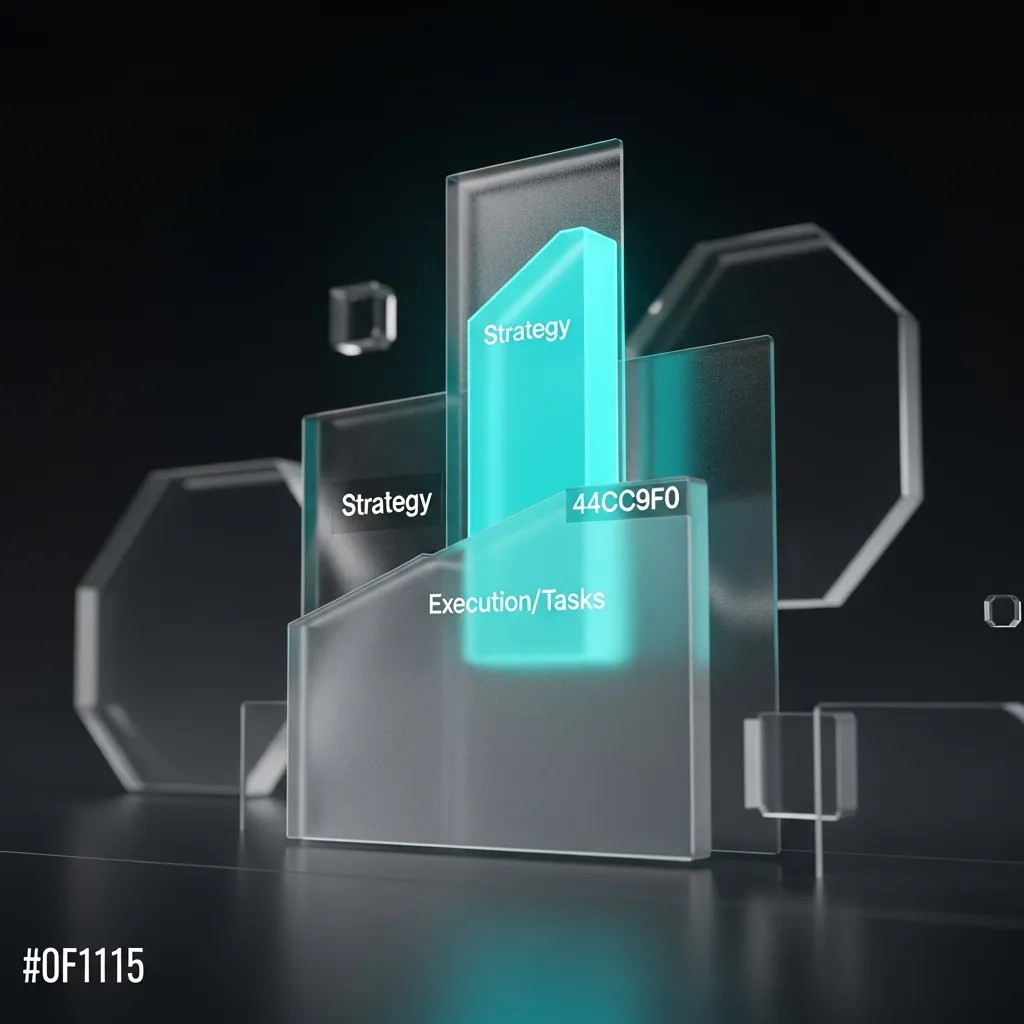 \n\n
\n\n \n\n\n
 \n\n\n\n
 \n
\n