
Why Your Cover Letter Needs a Powerful Closing
Many candidates view the cover letter as a formality—a polite preamble to the resume. They finish with a boilerplate line like, "Thank you for your consideration, I look forward to hearing from you." While polite, this closing is passive, and in the high-stakes world of job searching, passive means waiting.
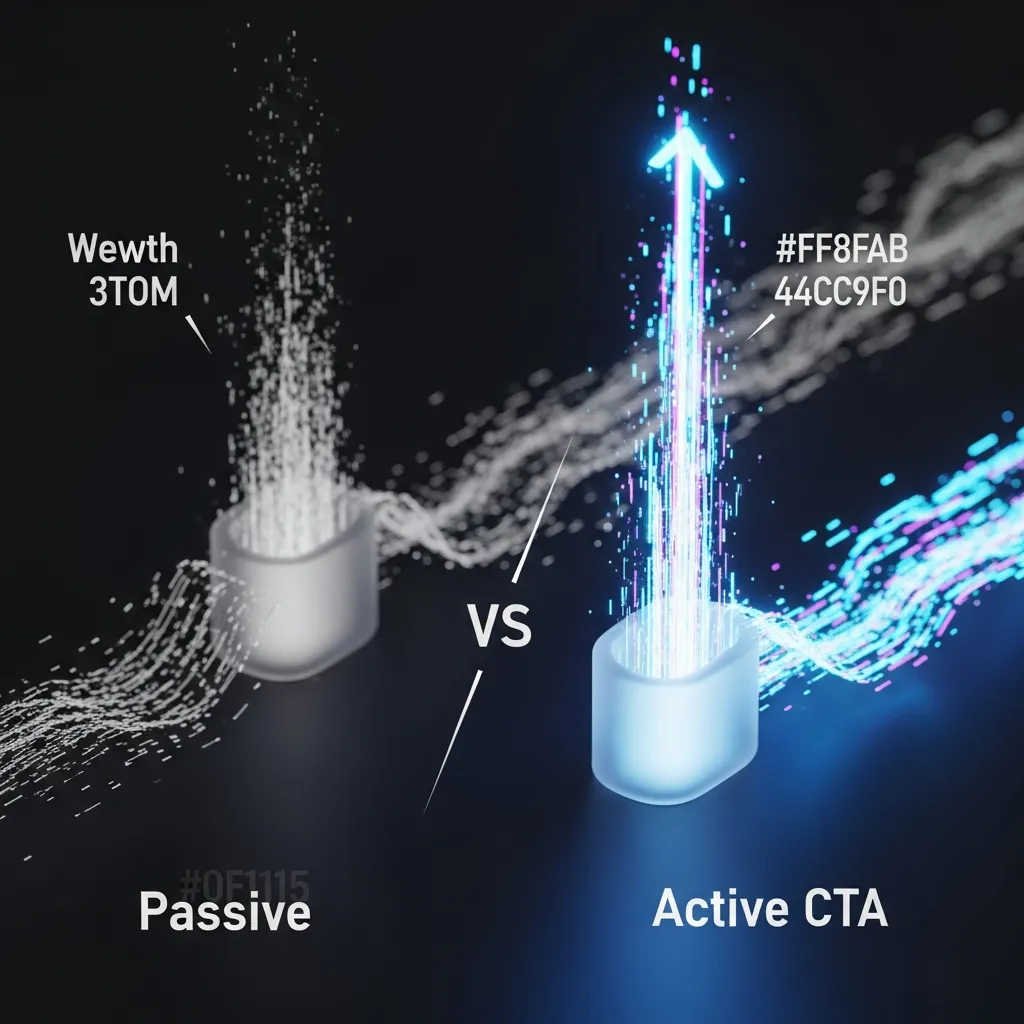
As your Candidate Protector, RolePilot emphasizes that the cover letter’s final paragraph—the Call to Action (CTA)—is the single most important part of the entire document. It’s where you transition from presenting information to requesting action. A weak CTA leaves the ball entirely in the recruiter's court, assuming they will remember to reach out. A strong CTA gently, yet firmly, guides them to the next step: scheduling a conversation.
If you've spent time customizing your resume (make sure to check its ATS compatibility at /ats-check.html), don't let your cover letter fizzle out. The closing should reinforce your value and provide a clear, easy path forward for the hiring manager.
Common CTA Mistakes That Protect Recruiters From You
When recruiters are reviewing hundreds of applications, they are looking for reasons to triage candidates quickly. A poorly constructed CTA often signals a lack of confidence or professional initiative.

1. The Passive Waiter
Mistake: "I hope to hear from you soon."
This phrasing implies uncertainty and positions you as waiting for permission. It gives the recruiter no immediate task other than filing your application. It’s too vague.
2. The Needy Pleader
Mistake: "Please call me anytime at your earliest convenience."
While direct, this lacks respect for the recruiter’s time and makes you seem desperate rather than desirable. It doesn't suggest a mutual professional benefit.
3. The Lack of Focus
Mistake: Ending with a generic summary of skills.
The CTA is for action, not review. Repeating your qualifications here dilutes the impact of your request for the next step. Keep the focus sharp: scheduling.
Crafting the Perfect Call to Action: Three Winning Formulas
A powerful CTA is direct, professional, and frames the potential conversation around the value you bring to the company. Use one of these formulas to maximize your response rate:
Formula 1: The Value-Driven Request
This works best when you’ve highlighted a specific problem or project in the body of your letter.
Example: "I am eager to discuss how my experience in optimizing email marketing funnels (resulting in a 15% uplift at my previous role) can immediately benefit your Q3 goals. Would you be available for a brief 15-minute call next week to explore this further?"
Formula 2: The Direct Confirmation
This is confident and assumes the interview is the natural next step.
*Example: "Given the strong alignment between my deep knowledge of Python development and the requirements of this role, I am confident I can exceed expectations. I welcome the opportunity to speak with you regarding the next stages of the interview process."
Formula 3: The Mutual Availability Suggestion
This shows you respect their schedule while keeping the initiative.
*Example: "To elaborate on my fit for the Senior Product Manager position and discuss how I can drive the launch of Project Phoenix, I am available to chat on Tuesday or Wednesday afternoon. Please let me know which time works best for you, or feel free to suggest an alternative."
Setting the Stage for the Next Step (The "When and How")
1. Be Specific About Time: Notice how Formula 3 offers specific days or time windows. This eliminates the back-and-forth email chain. Offering a defined time slot—or even just suggesting a time duration (e.g., "a brief 15-minute call")—makes the decision easier for the recruiter.

2. Keep it Brief and Located: Your CTA should be the last 1–2 sentences of the body. Do not pad it out. If you mention a specific project or achievement, ensure the reader can immediately recall the context from the rest of your letter.
3. Use Confident Language: Avoid conditional language ("If you decide to," "Perhaps we could"). Use active verbs like discuss, confirm, schedule, review, look forward to.
Beyond the Letter: Next Steps in Your Application Strategy
While a powerful CTA significantly increases your chances of getting noticed, remember that the cover letter is only one component. Ensure your entire application packet is flawless. Use tools like RolePilot to /ats-check.html your resume and verify that your hard-earned experience makes it past automated filtering systems.
By ending your cover letter with a clear, value-driven CTA, you are not just applying for a job; you are initiating a professional relationship. Take control of your career trajectory—don't wait for permission to be successful.